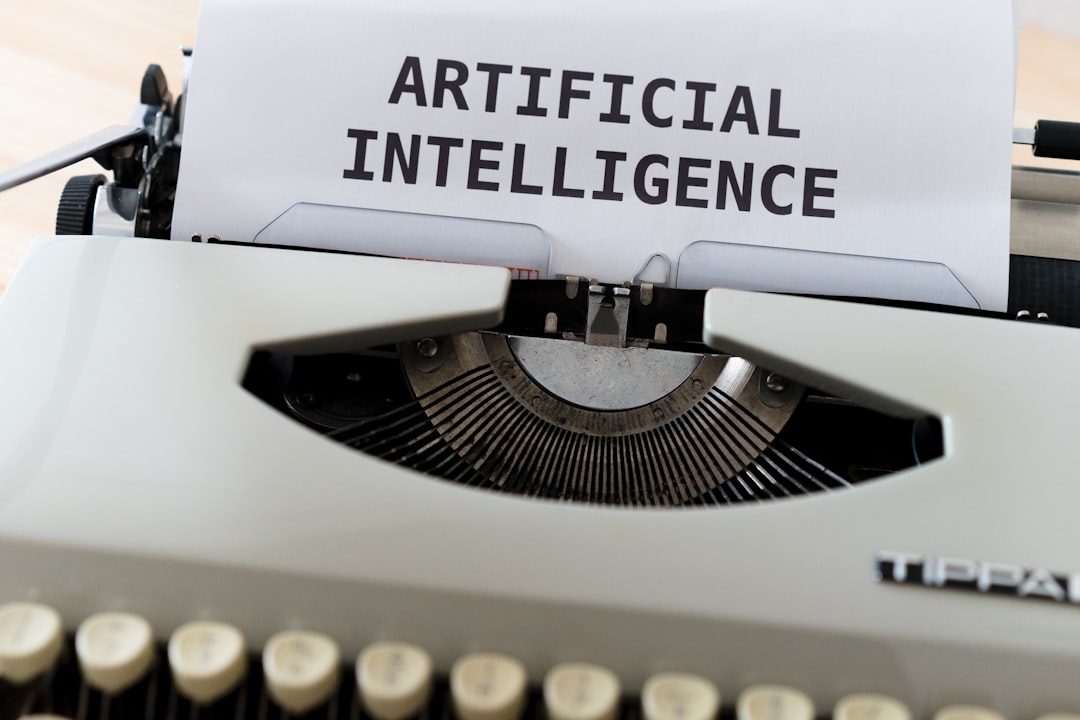
Digital Transformation and Its Impact on AI Integration
In an era defined by rapid technological advancement, digital transformation has ceased to be an optional endeavor and has become a fundamental imperative for organizational survival and growth. At its core, digital transformation involves leveraging digital technologies to create new or modify existing business processes, culture, and customer experiences to meet changing business and market requirements. This profound shift, however, is no longer solely about adopting cloud services or digitizing records; it has evolved into a far more sophisticated journey, intrinsically linked with the power of Artificial Intelligence (AI). The convergence of digital transformation and AI represents a pivotal moment for businesses across every sector. AI, with its capabilities in data analysis, pattern recognition, automation, and predictive modeling, acts not merely as a tool but as the central nervous system for modern digital initiatives. From enhancing operational efficiency to revolutionizing customer engagement and fostering unprecedented innovation, the successful integration of AI is increasingly determining the pace and success of digital transformation efforts in 2024 and beyond. This article will delve into the multifaceted relationship between digital transformation and AI integration, exploring how AI drives, shapes, and challenges the digital journey, ultimately laying the groundwork for a more intelligent, agile, and resilient future enterprise.
Understanding Digital Transformation in the AI Era
Digital transformation, traditionally viewed as the move from analog to digital processes, has undergone a significant evolution. Today, it encompasses a holistic overhaul of an organization\'s operational model, customer interactions, and even its core value proposition, driven by advanced technologies. In the current landscape, AI is not just another technology; it is the catalyst that redefines the very essence of what digital transformation can achieve. This shift from mere digitization to intelligent automation and personalized experiences marks a new chapter, where data-driven insights and autonomous capabilities are paramount.
The Evolution of Digital Transformation: Beyond Digitization
Initially, digital transformation focused on efficiency gains through the digitization of paper-based records and the adoption of enterprise resource planning (ERP) systems. The second wave saw the rise of cloud computing, mobile technologies, and social media, enabling remote work, enhanced collaboration, and new channels for customer engagement. However, the current iteration is characterized by a deeper integration of intelligent technologies. It\'s about leveraging big data analytics, machine learning, and deep learning to not just automate tasks but to predict outcomes, personalize experiences at scale, and create entirely new business models. This evolution implies a move from simply \"doing things digitally\" to \"doing things intelligently.\" Organizations are now seeking to embed intelligence into every facet of their operations, from supply chain optimization to predictive maintenance and hyper-personalized marketing campaigns, making AI integration a non-negotiable component of any successful digital strategy.
Key Pillars of Modern Digital Transformation Powered by AI
The contemporary digital transformation journey rests on several interconnected pillars, each profoundly impacted and enhanced by AI. First, Data-Driven Decision Making moves beyond simple reporting to leveraging AI for advanced analytics, predictive insights, and prescriptive recommendations, allowing businesses to anticipate market shifts and customer needs. Second, Hyper-Personalization is driven by AI algorithms that analyze vast amounts of customer data to deliver tailor-made products, services, and experiences, significantly boosting customer loyalty and satisfaction. Third, Operational Excellence and Automation benefits immensely from AI-powered robotics, intelligent process automation (IPA), and machine learning models that optimize workflows, reduce errors, and free human capital for more strategic tasks. Fourth, Enhanced Customer Experience (CX) is transformed through AI-powered chatbots, virtual assistants, and sentiment analysis tools that provide instant support, resolve issues efficiently, and understand customer emotions. Finally, Innovation and New Business Models are fueled by AI\'s ability to process complex data and identify emerging trends, enabling companies to develop disruptive products and services, creating new revenue streams and competitive advantages. These pillars collectively showcase how AI integration is not merely an add-on but an intrinsic component that elevates digital transformation from a technological upgrade to a strategic competitive differentiator.
The Symbiotic Relationship: AI as an Enabler of Digital Transformation
The relationship between digital transformation and AI is profoundly symbiotic. While digital transformation lays the groundwork for data availability and process modernization, AI acts as the engine that extracts value from these digital assets, propelling the transformation forward with intelligence and autonomy. AI\'s capabilities are not just enhancing existing digital processes; they are fundamentally reshaping what is possible, pushing the boundaries of efficiency, personalization, and innovation.
How AI Accelerates Digital Transformation Initiatives
AI significantly accelerates digital transformation by providing capabilities that conventional digital technologies cannot match. For instance, AI-driven analytics can process vast datasets far more rapidly and accurately than human analysts, uncovering hidden patterns and insights crucial for strategic decision-making. This speed allows businesses to iterate faster, respond to market changes more swiftly, and gain a competitive edge. AI also automates repetitive and complex tasks, from data entry to customer service inquiries, through technologies like Robotic Process Automation (RPA) and Natural Language Processing (NLP). This automation frees up human employees to focus on higher-value activities that require creativity, critical thinking, and emotional intelligence. Furthermore, AI\'s predictive capabilities enable organizations to anticipate future trends, customer behaviors, and potential operational issues, allowing for proactive adjustments rather than reactive responses. For example, in manufacturing, AI-powered predictive maintenance reduces downtime by identifying equipment failures before they occur, optimizing production schedules and extending asset life. This capability to foresee and adapt is a cornerstone of agile digital transformation, driving efficiency and resilience across the enterprise.
AI\'s Role in Modernizing Legacy Systems and Data Infrastructure
A significant hurdle in many digital transformation journeys is the presence of legacy systems and siloed data infrastructure. These older systems are often rigid, incompatible with modern technologies, and difficult to integrate, hindering the free flow of information essential for digital innovation. AI plays a crucial role in overcoming these challenges. Machine learning algorithms can be employed to analyze existing legacy data, identifying relevant information, cleaning inconsistencies, and transforming it into a format compatible with new digital platforms. This process, often referred to as \"data migration with intelligence,\" is far more efficient and accurate than manual methods. Moreover, AI-powered integration platforms can act as intelligent middleware, bridging the gap between disparate systems and enabling seamless data exchange. For example, AI can learn the data structures and communication protocols of various legacy systems and new cloud applications, automatically translating and routing information. This not only modernizes the data infrastructure but also unlocks the value trapped within historical data, making it available for AI-driven analytics and applications. By intelligently managing the complexity of legacy systems, AI integration enables a smoother and more effective transition to a fully digital and interconnected enterprise, paving the way for advanced analytics and automation.
AI-Driven Digital Transformation Strategies: A Roadmap for Success
Embarking on an AI-driven digital transformation requires more than just adopting new technologies; it necessitates a strategic roadmap that aligns technological implementation with overarching business objectives. Successful strategies integrate AI across the value chain, focusing on key areas that promise significant returns while also addressing the complexities of organizational change and ethical considerations.
Developing a Comprehensive AI Strategy Aligned with Business Goals
The foundation of successful AI integration lies in a clear, comprehensive strategy that is meticulously aligned with an organization\'s strategic business goals. This is not about implementing AI for AI\'s sake, but rather identifying specific pain points, opportunities for differentiation, or areas for efficiency gain where AI can deliver tangible value. The process begins with a thorough assessment of the current digital maturity, existing data infrastructure, and potential use cases where AI can make a significant impact. For instance, a retail company might prioritize AI for personalized marketing to boost sales, while a manufacturing firm might focus on predictive maintenance to reduce operational costs. Key steps include defining clear KPIs for AI projects, assessing the availability and quality of data, identifying the necessary technical skills, and establishing a governance framework for AI ethics and responsible use. This strategic alignment ensures that AI investments contribute directly to competitive advantage, revenue growth, or cost reduction, making the transformation purposeful and measurable. Without this strategic clarity, AI initiatives risk becoming fragmented, failing to deliver their full potential and leading to wasted resources.
Key Areas for AI Integration Across the Value Chain
AI\'s transformative power can be applied across virtually every segment of an organization\'s value chain, creating holistic improvements. In Research & Development, AI can accelerate innovation by analyzing vast datasets of scientific literature, simulating experiments, and designing new materials or product features, significantly reducing time-to-market. For example, pharmaceutical companies use AI to identify potential drug candidates faster. In Operations and Supply Chain Management, AI optimizes logistics, demand forecasting, inventory management, and even quality control, leading to reduced costs and increased efficiency. Retailers like Amazon leverage AI for sophisticated supply chain optimization, predicting demand and managing warehousing. Marketing and Sales benefit from AI through hyper-personalization, lead scoring, dynamic pricing, and automated customer outreach, leading to higher conversion rates and improved customer acquisition. Companies use AI-powered recommendation engines to suggest products, while sales teams use AI to prioritize leads. In Customer Service, AI-powered chatbots, virtual assistants, and sentiment analysis tools provide instant support, resolve queries efficiently, and enhance overall customer satisfaction, freeing human agents for complex issues. Finally, in Human Resources, AI aids in talent acquisition through intelligent resume screening, employee engagement analysis, and personalized learning and development recommendations. By strategically integrating AI into these diverse functions, businesses can unlock significant efficiencies, drive innovation, and create superior customer experiences, transforming their entire operational landscape.
Integrating AI into Digital Business Processes: Key Areas and Methodologies
Effective AI integration goes beyond adopting individual tools; it involves embedding AI capabilities directly into core digital business processes. This requires a systematic approach, understanding where AI can add the most value and employing robust methodologies to ensure seamless and scalable implementation. The goal is to create intelligent workflows that learn, adapt, and optimize over time, enhancing efficiency and decision-making.
AI-Powered Automation and Workflow Optimization
One of the most immediate and impactful areas for AI integration is in automation and workflow optimization. Traditional automation often relies on rule-based systems, but AI takes this a step further by enabling intelligent process automation (IPA) and cognitive automation. AI-powered tools can handle complex, unstructured data, make decisions based on learned patterns, and adapt to changing conditions. For example, in finance, AI can automate invoice processing, fraud detection, and compliance checks, significantly reducing manual effort and error rates. In customer service, AI-driven chatbots can handle routine inquiries, triage complex issues, and even learn from past interactions to improve their responses. This not only speeds up processes but also improves accuracy and consistency. Furthermore, AI can optimize workflows by analyzing process data, identifying bottlenecks, and suggesting improvements, leading to continuous operational efficiency gains. Companies like UiPath and Automation Anywhere are at the forefront of providing platforms that combine RPA with AI capabilities, enabling businesses to automate end-to-end processes, from data extraction using computer vision to decision-making using machine learning, thereby transforming their operational backbone.
Leveraging AI for Enhanced Data Analytics and Business Intelligence
The true power of digital transformation lies in its ability to generate vast amounts of data. However, raw data is only valuable when it can be processed into actionable insights. AI integration fundamentally transforms data analytics and business intelligence capabilities. Traditional BI tools provide retrospective views of performance, but AI extends this to predictive and prescriptive analytics. Machine learning algorithms can identify intricate patterns, correlations, and anomalies in massive datasets that would be impossible for humans to detect. This enables businesses to forecast future trends, anticipate customer behavior, and identify potential risks or opportunities before they fully materialize. For instance, in healthcare, AI analyzes patient data to predict disease outbreaks or personalize treatment plans. In retail, AI predicts product demand with greater accuracy, optimizing inventory and reducing waste. AI also democratizes data analysis by providing natural language processing (NLP) interfaces, allowing non-technical users to query data and receive insights in plain language. Tools like Tableau and Power BI are increasingly integrating AI capabilities, allowing users to leverage machine learning models for deeper insights without needing to be data scientists. This enhanced analytical capability is crucial for making informed, strategic decisions that drive growth and maintain a competitive edge in a rapidly evolving market.
Benefits of AI Integration in Digital Transformation: Unlocking Value
The strategic integration of AI into digital transformation initiatives yields a multitude of benefits, extending far beyond simple efficiency gains. These advantages touch upon every aspect of an organization, from core operations to customer relationships, ultimately driving competitive advantage and long-term sustainability. Understanding these benefits is crucial for justifying investment and aligning AI strategies with business outcomes.
Enhanced Operational Efficiency and Cost Reduction
One of the most tangible benefits of AI integration is the dramatic improvement in operational efficiency and subsequent cost reduction. By automating repetitive, data-intensive, or rule-based tasks, AI frees human employees from mundane work, allowing them to focus on more strategic, creative, and complex problem-solving activities. Robotic Process Automation (RPA) combined with AI can streamline back-office operations, significantly reducing processing times and errors in areas such as finance, HR, and supply chain management. For example, an insurance company might use AI to automate claims processing, reducing the time from submission to payout and cutting administrative costs. In manufacturing, AI-powered predictive maintenance reduces equipment downtime and extends asset lifespan, leading to substantial savings on repairs and replacements. Furthermore, AI optimizes resource allocation, energy consumption, and logistics, minimizing waste and improving overall resource utilization. This not only directly impacts the bottom line through reduced operational expenditures but also indirectly through improved productivity and faster time-to-market for products and services. The continuous learning capabilities of AI systems mean that these efficiencies tend to improve over time, providing compounding benefits.
Improved Customer Experience and Personalization
In today\'s competitive landscape, customer experience (CX) is a key differentiator, and AI integration is revolutionizing how businesses interact with and serve their customers. AI enables hyper-personalization at scale, allowing companies to deliver tailored products, services, and communications that resonate deeply with individual customer needs and preferences. Through sophisticated data analysis, AI algorithms can predict customer behavior, recommend relevant products, and even anticipate potential issues before they arise. Chatbots and virtual assistants powered by Natural Language Processing (NLP) provide instant, 24/7 support, resolving common queries efficiently and consistently, leading to higher customer satisfaction. For instance, a telecommunications company might use an AI chatbot to troubleshoot internet issues, guiding customers through steps without human intervention. Sentiment analysis tools can monitor customer feedback across various channels, providing real-time insights into customer emotions and helping businesses quickly address negative experiences. Companies like Netflix and Spotify are prime examples of leveraging AI for highly personalized content recommendations, significantly enhancing user engagement and loyalty. By creating more intuitive, responsive, and personalized interactions, AI integration transforms the customer journey, fostering deeper relationships and increasing customer retention and advocacy.
Fostering Innovation and New Business Models
Beyond efficiency and customer experience, AI integration is a powerful catalyst for innovation, enabling the creation of entirely new products, services, and even business models. AI\'s ability to process and analyze vast, complex datasets allows organizations to uncover novel insights, identify unmet market needs, and predict emerging trends that might otherwise remain unseen. This capability empowers R&D departments to accelerate discovery, design, and prototyping processes. For example, in the automotive industry, AI is crucial for developing autonomous vehicles and intelligent driving assistance systems, fundamentally changing transportation. In healthcare, AI assists in drug discovery, personalized medicine, and even surgical robotics, opening up new avenues for treatment and care. Furthermore, AI can drive the transition from product-centric to service-centric models, where physical products are augmented with AI-powered services that provide ongoing value. Consider the shift from selling a car to providing \"mobility as a service\" powered by AI-driven routing and predictive maintenance. AI also facilitates the development of intelligent platforms and ecosystems that connect diverse stakeholders, creating network effects and new revenue streams. By providing a framework for intelligent automation, predictive analytics, and adaptive learning, AI integration empowers businesses to move beyond incremental improvements and embrace disruptive innovation, securing their relevance and growth in the future digital economy.
Challenges of AI Adoption in Digital Transformation: Navigating the Hurdles
While the benefits of AI integration are compelling, the journey is not without its obstacles. Organizations embarking on AI-driven digital transformation must be prepared to navigate a complex landscape of technical, organizational, ethical, and financial challenges. Addressing these hurdles proactively is critical for successful implementation and realizing AI\'s full potential.
Data Quality, Governance, and Integration Issues
At the heart of any successful AI initiative lies data. However, the reality for many organizations is a fragmented landscape of poor data quality, inconsistent formats, and siloed repositories. AI models are only as good as the data they are trained on, and \"garbage in, garbage out\" remains a fundamental truth. Challenges include incomplete or inaccurate data, lack of standardization, and difficulties in integrating data from disparate legacy systems and external sources. Establishing robust data governance frameworks – encompassing data collection, storage, security, privacy, and lifecycle management – is paramount. This involves defining clear ownership, implementing data quality checks, and ensuring compliance with regulations like GDPR or CCPA. Without a clean, well-managed, and accessible data foundation, AI models will struggle to deliver accurate insights or perform effectively, leading to flawed decisions and a failure to realize the anticipated benefits of AI integration. Investing in data cleansing, master data management, and modern data platforms is a prerequisite for any meaningful AI adoption strategy.
Talent Gap and Organizational Resistance
The successful adoption of AI requires a unique blend of technical expertise and business acumen, skills that are often in short supply. There is a significant talent gap for roles such as AI engineers, data scientists, machine learning specialists, and AI ethicists. Organizations struggle to recruit and retain these highly specialized professionals, leading to project delays and suboptimal implementations. Beyond technical skills, there\'s also the challenge of organizational resistance to change. Employees may fear job displacement due to automation, leading to reluctance in adopting new AI-powered tools or processes. This resistance can manifest as a lack of engagement, skepticism, or even active sabotage of AI initiatives. Overcoming this requires a proactive change management strategy, including clear communication about AI\'s role in augmenting human capabilities rather than replacing them, comprehensive training programs, and involving employees in the design and implementation of AI solutions. Fostering an AI-first culture that encourages experimentation, continuous learning, and cross-functional collaboration is essential to mitigate resistance and build internal capabilities.
Ethical Considerations and Responsible AI Implementation
As AI systems become more autonomous and influential, ethical considerations move to the forefront of digital transformation efforts. Bias in AI algorithms, often inherited from biased training data, can lead to discriminatory outcomes in areas like hiring, loan approvals, or criminal justice. Lack of transparency in \"black box\" AI models makes it difficult to understand how decisions are made, raising concerns about accountability and fairness. Privacy is another critical concern, as AI systems often rely on vast amounts of personal data, necessitating robust safeguards and adherence to privacy regulations. Implementing AI responsibly requires developing clear ethical guidelines, ensuring algorithmic transparency and explainability, and actively mitigating bias through diverse datasets and rigorous testing. This also involves establishing oversight committees, conducting regular ethical audits, and prioritizing human-in-the-loop approaches where appropriate. Organizations must consider the societal impact of their AI solutions and strive to build systems that are fair, accountable, and beneficial to all stakeholders. Neglecting these ethical dimensions not only carries reputational risks but also legal and regulatory repercussions, hindering the long-term success of AI integration.
| Aspect | Benefits of AI Integration | Challenges of AI Adoption |
|---|
| Operational Efficiency | Automated tasks, reduced errors, optimized resource allocation, predictive maintenance, faster processing. | Integration with legacy systems, complex setup, need for continuous monitoring and calibration. |
| Customer Experience | Hyper-personalization, 24/7 support (chatbots), faster issue resolution, proactive engagement, sentiment analysis. | Maintaining human touch, managing customer expectations, data privacy concerns for personalization. |
| Data & Analytics | Advanced predictive/prescriptive insights, faster data processing, hidden pattern detection, democratized analytics. | Poor data quality, siloed data sources, data governance complexities, interpretability of complex models. |
| Innovation & Growth | New product/service development, discovery of market opportunities, new business models, competitive differentiation. | High initial investment, risk of failure, need for continuous R&D, difficulty in measuring ROI for nascent innovations. |
| Workforce & Culture | Augmented human capabilities, focus on high-value tasks, enhanced decision support. | Talent gap, employee resistance, fear of job displacement, need for upskilling/reskilling. |
| Ethics & Governance | Potential for fairer decisions (if designed well), increased transparency (through explainable AI). | Algorithmic bias, lack of transparency, privacy concerns, accountability issues, regulatory compliance. |
Measuring the ROI of AI in Digital Transformation Initiatives
Quantifying the return on investment (ROI) for AI initiatives within digital transformation can be complex, as benefits are often both direct and indirect, tangible and intangible. However, establishing clear metrics and a robust measurement framework is essential for justifying investments, demonstrating value, and securing continued stakeholder support. A comprehensive approach considers various dimensions of value creation.
Establishing Metrics for AI Performance and Business Impact
Measuring the ROI of AI integration requires moving beyond traditional financial metrics to include operational, customer-centric, and innovation-related indicators. For operational efficiency, key metrics might include reduced processing time, decreased error rates, lower labor costs per unit, or increased throughput. For example, an AI-powered fraud detection system could measure the reduction in fraudulent transactions and the associated financial losses saved. In customer experience, metrics like customer satisfaction (CSAT) scores, Net Promoter Score (NPS), customer churn rates, and average resolution time for customer queries can demonstrate AI\'s impact. For a marketing campaign, AI\'s effectiveness could be measured by conversion rates, customer lifetime value (CLTV), or personalized engagement metrics. Innovation can be harder to quantify but might include metrics like time-to-market for new products, the number of successful new revenue streams generated, or the speed of R&D cycles. It\'s crucial to establish baseline metrics before AI implementation to allow for accurate comparison and attribution of improvements directly to AI. Regular monitoring and reporting of these KPIs provide tangible evidence of AI\'s contribution to digital transformation objectives.
Case Studies: Realizing Tangible ROI from AI Integration
Numerous organizations across industries have demonstrated significant ROI from their AI integration efforts. For instance, in the financial sector, JP Morgan Chase utilized AI and machine learning to automate the processing of legal documents, drastically reducing manual hours and errors. Their Contract Intelligence (COiN) platform processes 12,000 credit agreements in seconds, a task that previously took legal teams 360,000 hours per year. This represents a clear return on investment through massive efficiency gains and cost savings. In healthcare, Google\'s DeepMind developed AI models that can detect eye diseases and breast cancer with accuracy comparable to or exceeding human experts, leading to earlier diagnoses and better patient outcomes. While direct financial ROI can be complex, the value in improved health and saved lives is immense, alongside potential reductions in misdiagnosis costs. In retail, Starbucks leverages AI to personalize orders and promotions through its mobile app, analyze store data for operational improvements, and optimize inventory. This AI-driven personalization has significantly boosted customer engagement, loyalty, and sales. Their success demonstrates how AI integration can directly impact revenue growth and customer retention. These examples highlight that while the specific metrics vary by industry and application, the consistent theme is AI\'s capacity to deliver substantial value by enhancing efficiency, improving customer satisfaction, and fostering innovation, thereby providing a compelling return on investment for digital transformation initiatives.
The Future of AI and Digital Transformation: Emerging Trends and Opportunities
The convergence of AI and digital transformation is not a static state but an evolving frontier. As AI technologies advance and organizations gain more experience, new trends and opportunities emerge, promising an even more profound impact on business, society, and the global economy. Understanding these future directions is vital for strategic planning and staying ahead of the curve.
The Rise of Generative AI and Hyper-Automation
One of the most exciting and rapidly evolving areas is the rise of Generative AI, exemplified by large language models (LLMs) and diffusion models. Generative AI is moving beyond analytical tasks to actively create content, from text and code to images and music. This capability has profound implications for digital transformation, enabling businesses to automate creative processes, accelerate content generation for marketing and product development, and even design new solutions with unprecedented speed. Imagine AI generating personalized marketing copy, developing initial software code, or creating synthetic data for training other AI models. This capability, combined with existing AI automation, is leading towards \"hyper-automation\" – an end-to-end business process automation strategy where AI, machine learning, RPA, and other intelligent technologies work in concert to automate virtually every aspect of an organization that can be automated. This will lead to highly autonomous and self-optimizing digital enterprises, dramatically increasing agility, scalability, and efficiency. The integration of generative AI into business processes will unlock new levels of creativity and productivity, transforming roles and enabling organizations to innovate at a pace previously unimaginable.
Ethical AI, Explainable AI (XAI), and Trust in Digital Systems
As AI becomes more pervasive, the focus on ethical AI and building trust in digital systems will intensify. The future of AI integration in digital transformation will be heavily influenced by the demand for Explainable AI (XAI), which aims to make AI models more transparent and interpretable. XAI will be crucial for regulatory compliance, risk management, and fostering user confidence, especially in critical applications like healthcare, finance, and autonomous systems. Organizations will increasingly prioritize frameworks for responsible AI development, focusing on fairness, accountability, and transparency. This includes developing robust methods for detecting and mitigating algorithmic bias, ensuring data privacy, and implementing human oversight mechanisms. Furthermore, the concept of \"AI governance\" will mature, with clearer standards, certifications, and perhaps even legal frameworks emerging to ensure AI systems are developed and deployed responsibly. Building trust in AI will not just be an ethical imperative but a business necessity, as consumers and stakeholders demand assurance that AI-driven digital systems are fair, secure, and beneficial. Companies that proactively invest in ethical AI and XAI will gain a significant competitive advantage, differentiating themselves as trustworthy and responsible digital leaders.
AI Integration with Edge Computing and IoT for Real-time Intelligence
The future of AI and digital transformation will also be characterized by deeper integration with edge computing and the Internet of Things (IoT). As billions of IoT devices generate unprecedented volumes of data at the \"edge\" (i.e., outside traditional data centers or cloud environments), processing this data in real-time becomes critical. AI models deployed directly on edge devices (Edge AI) will enable instantaneous analysis and decision-making without the latency associated with sending data to the cloud. This has transformative implications for industries requiring real-time intelligence, such as smart manufacturing, autonomous vehicles, smart cities, and remote healthcare monitoring. For example, in smart factories, AI on edge devices can analyze sensor data to detect anomalies and predict equipment failures instantly, preventing costly downtime. Autonomous vehicles rely on Edge AI for real-time perception and decision-making to navigate safely. This combination of AI, edge computing, and IoT creates a truly intelligent, responsive, and distributed digital infrastructure, driving hyper-efficient operations and enabling new services that require immediate local processing. This decentralized intelligence will be a cornerstone of the next wave of digital transformation, ushering in an era of pervasive and responsive AI.
Frequently Asked Questions (FAQ)
What is the primary difference between digital transformation and AI integration?
Digital transformation is the broad, strategic process of adopting digital technologies to fundamentally change how a business operates, delivers value, and interacts with customers. AI integration is a critical component and enabler of modern digital transformation, specifically embedding Artificial Intelligence capabilities (like machine learning, NLP, computer vision) into these transformed processes to make them intelligent, autonomous, and data-driven. While digital transformation can occur without deep AI integration, truly impactful and future-proof digital transformation in 2024-2025 heavily relies on AI.
Why is AI considered essential for successful digital transformation today?
AI is essential because it provides the intelligence layer that unlocks the full potential of digital technologies. It moves digital transformation beyond mere digitization to intelligent automation, predictive analytics, hyper-personalization, and continuous innovation. AI enables organizations to derive actionable insights from vast datasets, automate complex tasks, enhance customer experiences at scale, and create new business models, all of which are critical for gaining a competitive edge and driving growth in the current market.
What are the biggest challenges companies face when integrating AI into their digital transformation efforts?
Key challenges include ensuring high-quality, accessible data (data governance issues), addressing the significant talent gap in AI expertise, managing organizational resistance to change, and navigating complex ethical considerations such as algorithmic bias, transparency, and data privacy. Overcoming these requires strategic planning, investment in data infrastructure, talent development, robust change management, and a commitment to responsible AI practices.
How can a company measure the ROI of AI integration in digital transformation?
Measuring ROI involves a combination of financial, operational, and strategic metrics. Financial metrics include cost savings from automation and increased revenue from personalized services. Operational metrics could be reduced processing times, lower error rates, or improved predictive accuracy. Strategic metrics might involve enhanced customer satisfaction (NPS, CSAT), faster time-to-market for new products, or the generation of new business opportunities. Establishing clear baseline metrics before implementation is crucial for accurate attribution of AI\'s impact.
What role does Generative AI play in the future of digital transformation?
Generative AI, such as large language models, is poised to revolutionize digital transformation by automating creative tasks, accelerating content generation (e.g., marketing copy, code, designs), and enabling hyper-personalized experiences. It will contribute to \"hyper-automation\" strategies, allowing for more autonomous and intelligent business processes. This will unlock new levels of efficiency, creativity, and innovation across various functions, from product development to customer engagement, redefining how businesses operate and interact with their stakeholders.
How important are ethical considerations in AI-driven digital transformation?
Ethical considerations are paramount. As AI systems become more integrated and influential, ensuring fairness, accountability, and transparency (FAT) is crucial. Neglecting issues like algorithmic bias, data privacy, and the \"black box\" nature of some AI models can lead to legal penalties, reputational damage, and erosion of customer trust. Responsible AI implementation, including clear governance, explainable AI (XAI) tools, and human oversight, is not just an ethical imperative but a business necessity for sustainable and trusted digital transformation.
Conclusion
The journey of digital transformation has unequivocally entered its AI-centric phase. What began as a quest for digital efficiency has matured into a strategic imperative driven by the intelligent capabilities of Artificial Intelligence. From reshaping operational paradigms and revolutionizing customer experiences to catalyzing unprecedented innovation, AI integration is no longer merely an option but the fundamental engine powering the next generation of digital enterprises. Organizations that strategically embed AI across their value chains are not just optimizing existing processes; they are fundamentally redefining their capabilities, creating adaptive, intelligent, and resilient business models poised for future success. While the path is fraught with challenges, including data complexities, talent shortages, and critical ethical considerations, the benefits far outweigh the hurdles. Proactive investment in data governance, robust change management, and a steadfast commitment to responsible AI practices are essential for navigating this transformative landscape. The future promises an even deeper symbiotic relationship, with emerging trends like Generative AI, hyper-automation, and the integration of AI with edge computing and IoT creating an era of pervasive, real-time intelligence. Businesses that embrace this intelligent evolution, prioritizing a holistic and ethical approach to AI integration, will not only survive but thrive, leading their respective industries into a future where digital transformation is synonymous with intelligent transformation. The time to act is now; the future is intelligent, and it\'s being built by those who master the art of AI integration.
*
Site Name: Hulul Academy for Student Services
Email: info@hululedu.com
Website: hululedu.com